Super-Puff Planets: Bigger and Fluffier Than Cotton Candy!
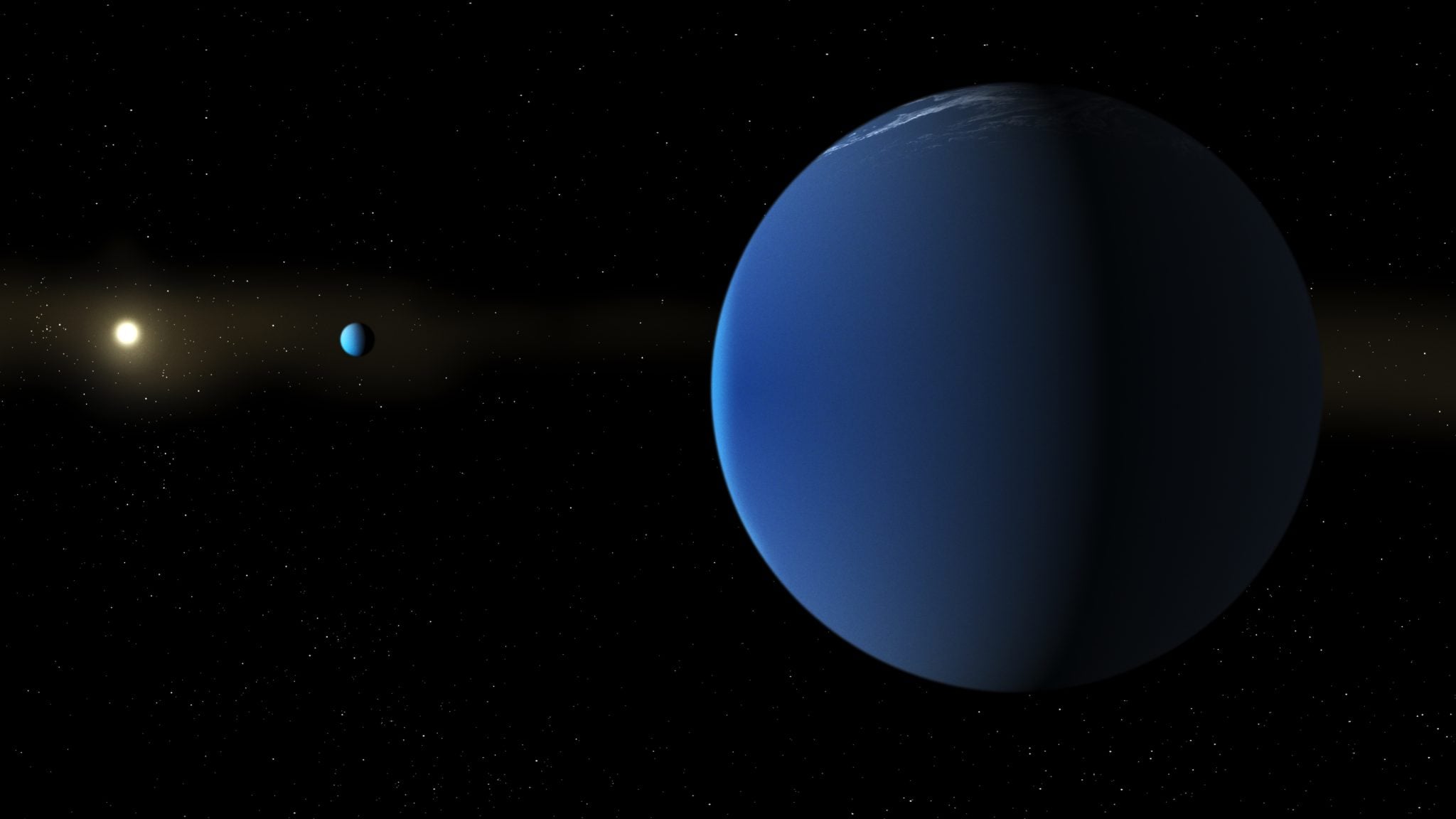
Astronomers have discovered two massive but super-light planets floating around a far-off star. These planets are so airy that they are even lighter than cotton candy, and scientists are excited to learn how they grew to be so puffy.
The News Of Kids
For ad-free reading
What Are Super-Puff Planets?
Scientists have a fun name for some very big, light planets: 'super-puffs.' They are huge, like the planet Jupiter, but they weigh almost nothing. Imagine a giant balloon that feels lighter than a feather—that is what these planets are like!
Why Is This Important?
Finding super-puffs helps us learn how planets are built. If a planet is this light, it probably has a thick layer of gases like hydrogen and helium wrapped around a tiny rocky center. This is very different from the planets in our own solar system.
The Discovery Team
The first clues came from volunteers who helped look through data from NASA's TESS telescope. They spotted tiny dips in the brightness of a star, which happen when a planet passes in front of it. These dips were super hard to see, so the sharp eyes of these volunteers were a big help.
Ground-Based Observations
To make sure these planets were real, astronomers used telescopes all over the world. The ASTEP observatory in Antarctica was super helpful because it stayed dark for months during the winter. This let scientists watch the planets cross their star for more than 11 hours—the longest time anyone has ever watched a planet cross its star from Earth!
Measuring Size and Mass
By watching how much the star’s light dimmed, the team figured out how big the planets were. Then, by seeing how the gravity of the planets pulled on each other, they guessed their weight. The results showed the planets were very light for their size.
Orbital Dance
The two planets, named TOI-791 b and TOI-791 c, dance in a special pattern: for every five times the inner planet goes around the star, the outer planet goes around three times. This special timing suggests they were born together from the same swirl of gas and dust.
The Mystery of Low Density
Scientists aren't quite sure yet why these planets are so airy. One guess is that they have huge, puffy layers of hydrogen and helium that make them look big but stay light. Another idea is that they lost some gas over time, leaving them in a puffed-up shape.
Did You Know?
The longest planetary trip across a star ever seen from Earth lasted more than 11 hours! That is even longer than a full day at school.
Future Plans
The team hopes to use the super-powerful James Webb Space Telescope to study the air around these planets. By looking at how light passes through that air, they can learn what the planets are made of.
Why Kids Should Care
Learning about super-puffs shows us that space is full of surprises! It reminds us that even the biggest things can be light and airy, just like a balloon. It also shows us how scientists use teamwork, computers, and telescopes to solve big mysteries.
In Summary
Two giant, light planets were found around a star 1,113 light-years away. They are so airy that they are lighter than cotton candy! Scientists are studying them to see how planets grow and change. Their discovery proves that space still has many secrets waiting for us to find them.


